
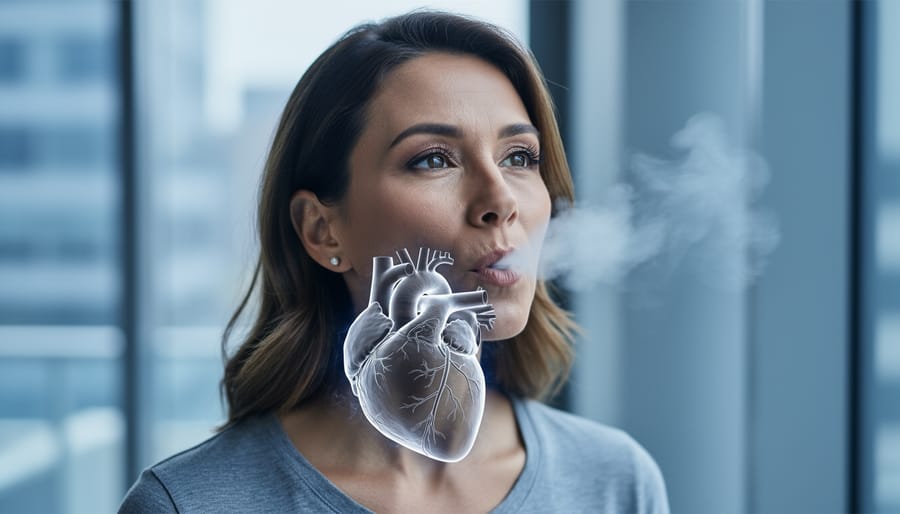
Tobacco damages your heart through two primary mechanisms: it directly injures the walls of your blood vessels, and it reduces the amount of oxygen reaching your heart muscle. Understanding these risks isn’t just academic. The smoking-heart link affects Canadian women in unique ways that deserve your attention, whether you’re currently smoking or supporting someone who is.
When you inhale tobacco smoke, thousands of chemicals enter your bloodstream and begin working against your cardiovascular system. The damage isn’t always dramatic or sudden. Instead, it builds quietly over time, making it easy to underestimate until serious problems develop.
For women, these cardiovascular risks carry additional weight. Hormonal factors, differences in blood vessel structure, and varied responses to tobacco’s chemical compounds mean that the same cigarette affects you differently than it would affect a man. These gender-specific vulnerabilities make understanding exactly how tobacco harms your heart particularly important.
The good news? Your body begins to recover the moment you stop smoking. Blood vessels start to heal, oxygen delivery improves, and your heart disease risk gradually decreases. This article explains the two core ways tobacco threatens your cardiovascular health, why these mechanisms matter especially to women, and what recovery looks like when you decide to quit.
Risk #1: Tobacco Damages Your Blood Vessel Walls
How Vessel Damage Leads to Heart Disease
Once the walls of your blood vessels are damaged, a cascade of problems begins that directly threatens your heart’s health.
The injured vessel lining becomes sticky, attracting cholesterol and other substances that wouldn’t normally cling there. Think of it like a smooth highway developing potholes, debris naturally collects in the rough spots. This buildup forms plaque, gradually narrowing the arteries that deliver blood to your heart muscle. As these passages shrink, your heart receives less of the oxygen-rich blood it needs to function properly.
Meanwhile, your cardiovascular system tries to compensate. Because blood now has to squeeze through narrower channels, pressure inside those vessels climbs. This elevated blood pressure forces your heart to pump harder with every beat, straining the muscle over time. The combination creates a vicious cycle: damaged vessels lead to higher pressure, which damages vessels further.
The vessel injury also makes blood clots more likely to form. When nicotine impairs endothelium function, the smooth vessel lining that normally prevents clotting becomes rough and irregular. Blood cells can stick to these damaged areas, forming clots that may completely block an already-narrowed artery. If a clot cuts off blood flow to part of your heart muscle, that’s when heart attack risk becomes immediate and serious.
This progression from vessel damage to heart disease doesn’t happen overnight, but it starts with the very first cigarette and accelerates with continued smoking. The inflammation and scarring accumulate silently, often without symptoms until the narrowing becomes severe.
Risk #2: Tobacco Reduces Oxygen Delivery to Your Heart

The Compounding Effect on Heart Function
When your blood vessels are already narrowed from tobacco damage, the reduced oxygen in your bloodstream creates a dangerous mismatch between what your heart needs and what it can get. Your heart muscle requires more oxygen to pump effectively through constricted arteries, yet the carbon monoxide in tobacco smoke means less oxygen is available. It’s like asking someone to run uphill while breathing through a straw.
This compounding effect puts extraordinary strain on your cardiovascular system. Your heart compensates by beating faster and contracting harder, which increases its own oxygen demands even further. The cycle becomes self-perpetuating: damaged vessels limit blood flow while depleted oxygen levels force the heart to work overtime.
Many women experience this strain as fatigue that seems disproportionate to their activity level. You might feel winded climbing stairs you used to handle easily, or notice your heart racing during routine tasks. Some women describe a heaviness in their chest during physical activity, or find they need to pause and catch their breath more often than before.
These symptoms reflect your heart struggling to meet your body’s needs with inadequate oxygen and restricted blood flow. The fatigue isn’t just tiredness; it’s your cardiovascular system signaling that it cannot efficiently deliver oxygen to your tissues. For some women, these warning signs appear gradually and get dismissed as normal aging or stress, which makes recognizing the tobacco connection particularly important.
Why These Risks Matter Especially for Women
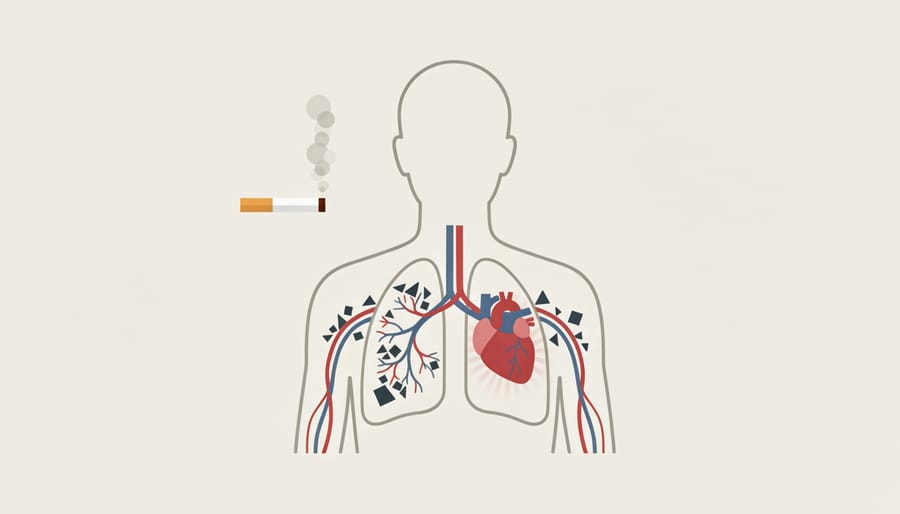
Women’s bodies respond differently to tobacco’s cardiovascular assault, and understanding these differences matters for your health decisions and advocacy.
Estrogen, often discussed for its protective effects on heart health, can’t shield you if you smoke. Tobacco exposure interferes with how your body uses this hormone, essentially canceling out the cardiovascular protection many women rely on during their reproductive years. The combination of smoking and hormonal contraceptives creates additional concerns, as both affect blood clotting mechanisms in ways that can compound your risk.
The vessel damage and oxygen reduction tobacco causes take on particular significance during pregnancy. Your developing baby depends entirely on your blood vessels for oxygen and nutrients. When tobacco narrows those vessels and reduces oxygen-carrying capacity, it creates challenges for fetal development that extend beyond birth. The heart and circulatory system forming in utero are especially vulnerable to these disruptions.
Menopause brings another critical intersection. The natural decline in estrogen that occurs during this transition already shifts cardiovascular risk profiles for women. If you’re still smoking during this life stage, you face the double burden of losing hormonal protection while actively damaging your blood vessels and reducing oxygen delivery to your heart.
Canadian researchers studying women’s heart disease have identified another troubling pattern: women who smoke often experience different symptoms than men during cardiac events, and these atypical presentations can delay diagnosis and treatment. The fatigue, shortness of breath, and subtle discomfort you might attribute to stress or aging could signal that tobacco has already damaged your cardiovascular system.
Your experiences with these risks are valid, and the challenges you face in protecting your heart health deserve recognition and support tailored to women’s specific needs.
Your Heart’s Capacity for Recovery
Your heart is more resilient than you might think. When you stop using tobacco, your cardiovascular system begins repairing itself almost immediately, and this healing continues for years. The damage to your blood vessel walls and the oxygen deprivation you’ve been experiencing don’t have to be permanent conditions.
The recovery happens in layers. In the immediate hours after your last cigarette, your body starts clearing carbon monoxide from your blood, which means your heart no longer has to work as hard to deliver oxygen throughout your body. You might notice you can breathe more easily or that climbing stairs feels slightly less taxing. These early changes are your cardiovascular system taking its first breath of relief.
Over the following weeks and months, the injured lining of your blood vessels begins to heal. The chronic inflammation that was triggering plaque buildup starts to settle. Your blood pressure may gradually decrease as your arteries regain some of their lost flexibility. The risk of blood clots forming in damaged vessel walls diminishes as the endothelium repairs itself. Each day without tobacco gives your body another opportunity to reverse some of the harm.
The long-term healing is equally remarkable. Your cardiovascular system continues to strengthen and recover for years after you quit. The narrowed arteries can become more efficient at delivering blood to your heart muscle. Your overall heart disease risk keeps dropping as your vessels continue to heal and your heart adapts to working under healthier conditions.
Quitting isn’t easy, and acknowledging that difficulty is important. But it’s also one of the most powerful acts of self-care you can undertake. You don’t have to do it alone. Canadian support systems exist specifically to help women through the quitting process, offering counseling, medication options, and peer support programs. Your provincial health authority can connect you with free cessation programs, and organizations like the Heart and Stroke Foundation provide resources tailored to women’s experiences.

Common Questions About Tobacco and Heart Health
Are other forms of tobacco safer for your heart than cigarettes? Cigars, pipes, and smokeless tobacco all deliver nicotine and harmful chemicals that damage blood vessels and strain your heart. While the delivery method differs, the cardiovascular risks remain real. Even smokeless tobacco raises blood pressure and heart rate while exposing you to toxins that injure artery walls.
Does secondhand smoke carry the same heart risks?
Yes, breathing secondhand smoke exposes you to many of the same chemicals that damage blood vessels and reduce oxygen delivery. Regular exposure increases cardiovascular risk even if you’ve never smoked yourself.
Is vaping better for my heart than smoking?
Vaping delivers nicotine, which raises heart rate and blood pressure, and exposes you to chemicals whose long-term cardiovascular effects aren’t fully understood. It’s not a risk-free alternative, though some people use it as a transition tool when quitting combustible tobacco.
How much smoking is safe for my heart?
There’s no safe level of tobacco use for cardiovascular health. Even light or occasional smoking damages blood vessels and affects oxygen delivery, though heavier use amplifies these risks.
Where can I find support to quit in Canada?
Health Canada offers resources through their Quit Smoking portal, many provinces provide free telephone quitlines, and your healthcare provider can discuss medications and strategies tailored to your needs. You don’t have to navigate this alone.
These questions reflect what many women ask when they’re weighing their options or supporting someone they care about. The answers aren’t meant to shame or lecture. They’re here to give you clear information you can trust as you make decisions about your health. Whatever stage you’re at in thinking about tobacco use and your heart, having accurate answers helps you move forward with confidence.
