

Physical activity is any movement that gets your muscles working and your body using more energy than it does at rest. A brisk walk to the bus stop counts. So does raking leaves, dancing in your kitchen, or a swim at the community pool. It doesn’t have to be a gym session to do your heart good.
What matters is what that movement does inside your body. Regular activity strengthens your heart muscle, helps keep blood pressure in a healthy range, improves how your body handles blood sugar and cholesterol, supports a healthy weight, and builds the muscle and bone that keep you steady on your feet. That’s five physical benefits you can feel and measure, and this article walks through each one in plain language.
For women, the picture has its own details. Women’s heart disease often shows up differently than it does in men, and activity needs shift through pregnancy, perimenopause, and beyond. We’ll also look at what Canadian guidelines from organizations like Heart & Stroke and ParticipACTION recommend, and how to keep moving when winter makes the sidewalk less inviting. You’ll finish with simple, realistic ways to start, whatever your current routine looks like.
What Physical Activity Means for Your Heart

Your heart is a muscle, and like any muscle, it gets stronger and more efficient when you use it regularly. That’s the simple idea behind everything in this article. Physical activity is any movement that makes your body work a little harder than it does at rest, while exercise is the planned, repeated kind, like a gym class or a jog. Both count for your heart. Gardening, carrying groceries and chasing a toddler all do real work.
Here are a few terms you’ll see throughout the article:
- Physical activity
- Any movement that uses your muscles and burns more energy than resting, whether or not it’s planned.
- Exercise
- Physical activity that’s structured and repeated on purpose to improve fitness, such as a swim class or a regular jog.
- Moderate-intensity
- Effort that raises your heart rate and breathing but still lets you talk, like a brisk walk.
- Vigorous-intensity
- Effort that leaves you breathing hard enough that you can only say a few words at a time, like running or fast cycling.
The Canadian 24-Hour Movement Guidelines suggest adults aim for about 150 minutes of moderate-to-vigorous activity each week. That sounds like a lot until you break it down: ten minutes here, fifteen there. Every bit counts, and starting small is a perfectly valid place to begin.
We also know that time is rarely simple for women. Work, caregiving and household demands often push movement to the bottom of the list. On top of that, women have historically been underrepresented in heart studies, which is why women’s heart research matters so much. Your needs deserve to be understood, and your efforts, however small, are worth it.
How Movement Strengthens the Heart and Blood Vessels

Think of your heart as a muscle, much like the muscles in your arms or legs. When you ask it to work a little harder through regular movement, it adapts. Over time, it gets stronger, and each beat pushes out more blood. That means your heart can do the same job with fewer beats, which eases its workload even when you’re sitting on the couch.
Your blood vessels respond too. Picture a garden hose that’s stiff and brittle versus one that’s soft and bendy. Regular activity helps your arteries stay more like the bendy hose. Each time you get moving, your blood flow increases, and the vessel walls respond by staying flexible and relaxing more easily. Flexible vessels let blood flow with less resistance, which helps keep pressure steadier.
Movement also changes what happens inside your muscles. Active muscles get better at pulling oxygen out of your blood and using sugar (glucose) for fuel. It’s a bit like tuning an engine so it runs smoothly on less gas. When your muscles use sugar well, there’s less left floating around in your bloodstream, which is good news for your heart.
Finally, activity helps your body handle stress and inflammation. Exercise gives your stress hormones a healthy outlet, and regular movement is linked to lower levels of the low-grade inflammation that can irritate blood vessel walls over time. For many women juggling work, family, and everything in between, this calming effect is a welcome bonus.
Five Physical Benefits of Staying Active
1. A Stronger, More Efficient Heart
Your heart is a muscle, and like any muscle, it gets stronger with regular use. When you stay active, your heart learns to pump more blood with every single beat. That means it doesn’t have to beat as often to deliver the oxygen your body needs.
This is why exercise lowers resting heart rate over time. A lower resting heart rate often signals a heart that’s working smarter, not harder. Think of it like a well-tuned engine that runs smoothly at lower revs, so there’s less strain on the system day after day.
The good news is that you don’t need a gym membership or intense workouts to start. Moderate activity, like a brisk walk where you can still talk but couldn’t sing, is enough to begin building this strength. Even short bouts count. A ten-minute walk after dinner or a lively stroll with a friend is a real investment in your heart.
Over weeks and months, those small efforts add up, helping your heart do more with less effort.
2. Healthier Blood Pressure
Think of your arteries as flexible garden hoses rather than rigid pipes. Regular movement helps them stay that way, and research shows that aerobic exercise improves arterial compliance meaning your vessels stretch and recoil more easily with each heartbeat. That can ease pressure on the vessel walls, and for many people with elevated blood pressure, steady activity like brisk walking helps bring the numbers down.
For women, the story has a few extra chapters. Blood pressure patterns often shift after menopause, and pregnancy-related conditions such as preeclampsia can raise your heart risk years later. If either applies to you, regular activity is especially worthwhile. It’s a practical, empowering step you can take now.
Other habits matter too. Learning about the link between smoking and heart health can help you see the bigger picture of protecting your arteries.
Talk with your healthcare provider about your numbers and how to start safely. They can help you set a plan that fits your life.
3. Better Cholesterol and Blood Sugar Balance
Cholesterol and blood sugar are two numbers your doctor may mention at checkups, and movement helps with both.
Think of HDL cholesterol as the “good” kind. It acts like a cleanup crew, carrying extra cholesterol away from your arteries. Regular activity, especially brisk walking, cycling, or swimming, can nudge HDL up. It also tends to lower triglycerides, a type of fat in your blood that, when high, adds to heart risk.
Activity also helps with insulin, the hormone that moves sugar from your blood into your muscles for energy. When your muscles are used often, they respond to insulin better and soak up sugar more easily. That means steadier blood sugar and a lower chance of type 2 diabetes, which raises heart risk, and the risk can climb after menopause.
You don’t need intense workouts to see a shift. A 10-minute walk after meals is a gentle, realistic way to start.
4. Easier Weight Management and Less Belly Fat
Regular movement helps your body manage weight in a steady, sustainable way. Activity burns energy, builds and preserves muscle, and helps your body respond better to insulin, all of which support a weight that’s healthy for you.
What matters most for your heart is where the body stores fat. Visceral fat is the deeper fat that wraps around organs in the abdomen. It’s more active than the fat just under your skin, and it’s linked to inflammation and higher heart risk. Research suggests that regular physical activity can shrink visceral fat even when the number on the scale barely moves.
For many women, midlife brings real changes. As estrogen levels drop during perimenopause and menopause, the body tends to store more fat around the middle, even when habits stay the same. That’s biology, not a personal failing.
Health isn’t defined by a scale reading. Better strength, steadier energy, and improved blood pressure and blood sugar all count as wins. Focus on how movement makes you feel, and let your body’s progress speak for itself.
5. More Energy, Stamina, and Better Sleep
When your heart and blood vessels move oxygen more efficiently, everyday life gets a little easier. Carrying groceries upstairs, chasing after a grandchild, or finishing a long shift leaves you less winded. That extra stamina builds slowly, often within a few weeks of regular movement, and it shows up in ordinary moments more than on any fitness tracker.
Activity also tends to improve sleep. Many people fall asleep faster and wake less often when they move regularly, and women going through perimenopause or menopause may find this especially welcome, since night sweats and restless nights are common. Good sleep matters for your heart, too. It gives your blood pressure a chance to dip overnight and helps your body recover from the day.
There’s a supportive bonus as well. Moving your body can ease stress and lift your mood by helping your system settle after a hectic day. For women balancing work, family, and caregiving, even a 10-minute walk can feel like a reset. Over time, more energy, calmer nights, and a steadier mood all work together to protect your heart.
Types of Activity That Support Heart Health
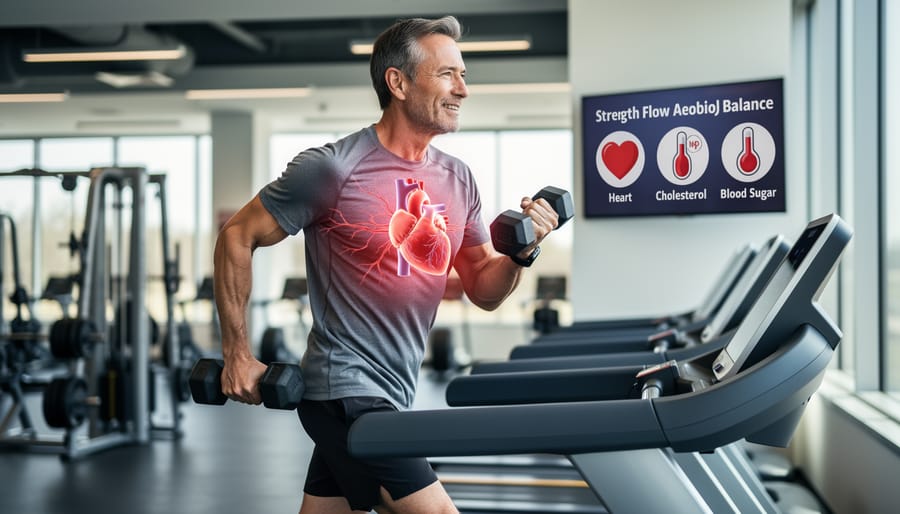
Your heart benefits from more than one kind of movement. Think of these four categories as a toolkit rather than a checklist, and pick what fits your body, schedule, and budget.
Aerobic (cardio) activity is anything that raises your heart rate and makes you breathe a little harder. Brisk walking, swimming, cycling, and dancing all count. This is the type that does the most direct work on your heart and blood vessels, and the Canadian guidelines build their weekly 150-minute target around it. If joints are a concern, water walking or a stationary bike gives you the same heart benefit with less impact.
Muscle-strengthening activity, done on at least two days a week, helps your body use sugar and oxygen more efficiently. It also protects bone strength, which matters for women after menopause. You don’t need a gym. Resistance bands, a set of soup cans, bodyweight moves like wall push-ups, or a few sit-to-stand repeats from a chair all work.
Balance and flexibility work keeps you steady and moving confidently, which helps you stay active for the long haul. Yoga and tai chi are wonderful here, and many people find they ease stress too, which supports the heart in its own right. Traditional and cultural dance, from powwow dancing to Bollywood to line dancing, blends several categories at once. Community-based and Indigenous movement practices, like walking groups and land-based activities, are valid and valuable ways to be active.
Everyday movement is the quiet hero. Taking the stairs, walking the dog, raking leaves, carrying groceries, and playing with grandchildren all add up. For many women juggling caregiving and work, these small bursts are where activity actually happens, and they count.
How to Put Physical Activity to Work in Your Life
Putting these benefits to work looks different at every stage of life, and that’s fine. In the busy parenting years, movement often has to squeeze between school runs and work, so short bursts count. In perimenopause and menopause, strength training and brisk walking can help with energy, sleep and heart health as hormones shift. After pregnancy, gentle walking is a common starting point, though your provider can tell you when to ramp up. In older adulthood, balance work and steady walking keep you independent. If you live with a heart condition, your care team can help you shape a plan that suits your body.
Canadian weather shapes the plan too. In winter, try mall walking, community centre programs or a living-room workout. When it warms up, move your walks, bike rides and gardening outside.
A few ways to make it stick:
- Start with 10-minute walks and add time as it feels good.
- Pair movement with social time, like walking with a friend.
- Join a walking group for built-in company and accountability.
- Set small weekly goals you can actually reach.
- Track progress kindly, celebrating effort rather than perfection.
- Rest when you need to, because recovery is part of the plan.
Check with your doctor before starting if you have a heart condition or any symptoms. Women’s heart symptoms can differ from men’s. Beyond chest pain, they may include unusual fatigue, shortness of breath, nausea or discomfort in the jaw, neck or back, so pay attention to how your body feels. For programs, tips and community support, the Heart & Stroke Foundation of Canada and ParticipACTION are good places to begin.
Common Questions About Exercise and Heart Health
Most people start with the same handful of questions, and they’re good ones. Here are straight answers, plus a pointer to where you can dig deeper.
How much activity do I really need each week?
Canadian guidelines suggest about 150 minutes of moderate-to-vigorous activity weekly for adults, but anything you add beats nothing. Short bursts of 10 minutes count, so start where you are and build gradually.
Is walking enough, and do I need a gym?
Brisk walking is a proven way to support your heart, and no membership is required. Stairs, dancing in your kitchen, and active chores all add up, too.
Is it safe to exercise with high blood pressure or after a cardiac event?
For most people, regular movement is encouraged, but your plan should come from your care team. Ask whether a cardiac rehabilitation program is available to you.
How does menopause change what I should do?
Falling estrogen can affect blood pressure, cholesterol, and muscle mass. Mixing brisk walking with strength work and balance exercises is a sensible approach, and your provider can help tailor it.
When should you check in with a doctor first? If you have a heart condition, chest discomfort, unusual shortness of breath, dizziness, or a family history that worries you, have that conversation before ramping up. Remember that women’s heart symptoms can look different from men’s, such as unusual fatigue, nausea, or jaw and back pain, so don’t brush them aside.
You don’t have to figure this out alone. Our guide to Canadian heart resources points you to programs, support networks, and organizations ready to help you take the next step.
Here’s what regular movement can do for you: a stronger, more efficient heart, healthier blood pressure, better cholesterol and blood sugar balance, easier weight management with less belly fat, and more energy, stamina and better sleep. Each benefit supports the others, and together they give your heart a real advantage, whether you’re in your thirties juggling a full house, navigating menopause, or building a gentler routine in your later years.
The good news is that these Physical Activity Benefits for Heart Health are within reach at any starting point. You don’t need a gym membership, special equipment or a perfect schedule. A brisk walk around the block, a few minutes of dancing in the kitchen, or a short stretch break between tasks all count, and they add up over time. Be kind to yourself on the days when life gets in the way. Showing up again tomorrow matters more than doing it flawlessly today.
So pick one small step this week. Maybe it’s a ten-minute walk after dinner, or inviting a friend to join you. If you have a heart condition or any symptoms, check in with your healthcare provider first. Healthy Hearts Canada is here to support you with resources and a caring community, alongside partners like the Heart & Stroke Foundation of Canada and ParticipACTION. You’ve got this, one step at a time.
